
How to Use Claude Sonnet 5 for Marketing: Opus-Level AI at a Fraction of the Cost
Claude Sonnet 5 for marketing brings Opus-level AI at a fraction of the cost. See how to use it for content, automation and agentic workflows.
Marketing teams have wanted top-tier AI for a while, but the best models often cost too much to run at scale. Claude Sonnet 5 for marketing changes that calculation. Released by Anthropic on 30 June 2026, Claude Sonnet 5 is a fast, agentic AI model that delivers close to Opus-level quality at a much lower price, which makes it practical for everyday marketing work rather than the odd showcase project.
If your team already leans on tools like ChatGPT or Gemini, it helps to understand what Claude’s agent features can do for a business before you commit to a budget. This release matters because it lowers the cost of running AI across content, campaigns and research, so smaller teams can automate work that used to need more hands or a bigger tools bill.
In this guide, we explain how to use Claude Sonnet 5 across four practical areas: content production, campaign and CRM automation, agentic research, and data analysis. We also cover the pricing, so you can weigh the value before you roll it out.
Key takeaways
- Claude Sonnet 5 gets close to Opus 4.8 quality at a lower price, matching it on some tasks at higher effort.
- Intro pricing is $2 per million input tokens and $10 per million output through 31 August 2026.
- Claude Sonnet 5 for marketing suits content, campaigns, research and reporting.
- Agentic search, computer use and self-checking help it finish multi-step tasks with less hand-holding.
- Keep a person in the loop; AI speeds the work but still needs review for accuracy and brand fit.
What is Claude Sonnet 5, and why does the price matter for marketers?
Claude Sonnet 5 is Anthropic’s fast, agentic model that performs close to the flagship Opus 4.8 but costs far less to run. For marketing teams, the low price means you can use a capable model for high-volume work like drafting, research and reporting without the bill climbing out of reach.
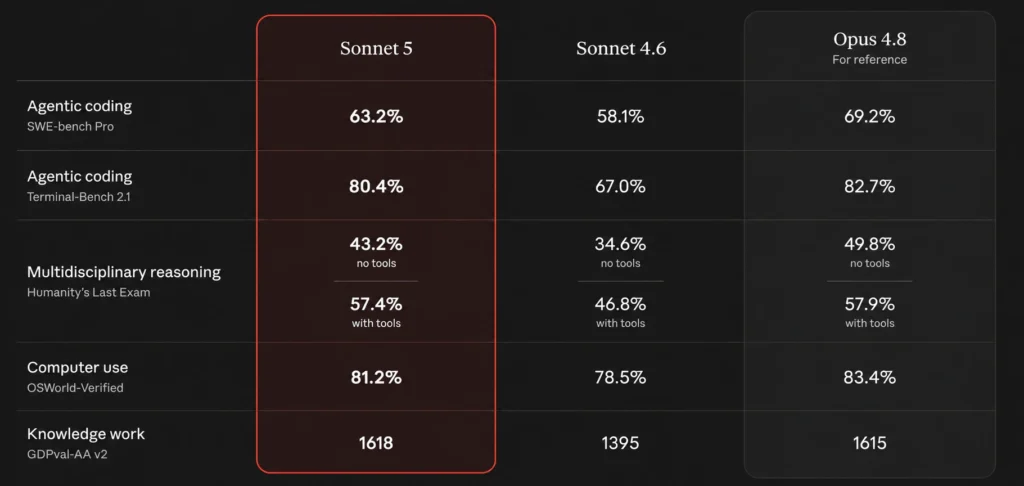
Anthropic frames the release plainly: Sonnet 5’s performance is close to that of Opus 4.8, but at lower prices, and its higher-effort settings can match Opus 4.8 on some tasks. According to Anthropic’s Claude Sonnet 5 announcement, the model launched with introductory pricing of $2 per million input tokens and $10 per million output tokens through 31 August 2026, after which it moves to $3 and $15. It is also a clear step up from the previous Sonnet 4.6 on reasoning, tool use and coding.
For comparison, Opus 4.8 costs $5 per million input tokens and $25 per million output, so you get most of the quality at roughly a third to a half of the price. Claude Sonnet 5 pricing is the first thing to weigh, because it sets how widely you can deploy the model across a team. That low cost is what makes Claude Sonnet 5 for marketing viable at scale, not just for the occasional experiment. When you factor in the shifts shaping digital marketing this year, that gap decides whether AI stays a pilot or runs across your whole funnel.
| Model | Input / output per million tokens | Positioning for marketers |
|---|---|---|
| Claude Sonnet 5 (intro, to 31 Aug 2026) | $2 / $10 | Close to Opus quality at the lowest cost |
| Claude Sonnet 5 (standard) | $3 / $15 | Every day, high-volume marketing work |
| Claude Opus 4.8 | $5 / $25 | The hardest reasoning tasks, when the budget allows |
How to use Claude Sonnet 5 for content production
Content is where most teams see value first. You can use the model to turn a rough brief into a first draft, repurpose a single blog post into emails, social posts and ad copy, and keep the tone consistent across every version. It handles long, messy inputs well, so you can feed it a call transcript or a product spec and get usable copy back.
What sets this release apart is self-checking. Anthropic reports that testers watched it finish complex tasks where earlier Sonnet models would stop short, and check its own output without being asked. In practice, that means fewer half-finished drafts and less time spent fixing obvious errors, which lightens the load on your content marketing workflow.
Popular Claude Sonnet 5 use cases in content include:
- First drafts built from briefs, transcripts or rough notes
- Repurposing one asset into emails, social posts and ads
- On-brand variants for A/B testing headlines and landing pages
- Summarising research into a clear, usable point of view
A good rule is to give the model your brand guidelines and one strong example, then let it draft while a person edits for nuance and fact-checks any claims. These Claude Sonnet 5 use cases work best when you treat the output as a first draft, not a finished page. The model is quick, but your team still owns tone, accuracy and the final call.
Used well, Claude Sonnet 5 for marketing content becomes a drafting partner that handles volume while people keep hold of judgment and voice. That split, machine speed with human review, is what turns AI from a novelty into a dependable part of the process. It also frees your writers to spend more time on the ideas that need a human.
How can you automate campaigns and CRM work with AI?
Yes, and this is a real shift. Claude Sonnet 5 can run multi-step marketing tasks end to end, such as updating records in your CRM and sending a linked announcement, without stalling halfway. Its agentic skills let it plan a job, use tools like browsers and terminals, and carry the work through, which suits repetitive campaign and data tasks.
AI for marketing automation used to mean rigid rules and brittle integrations. Sonnet 5 takes a different route. Anthropic shares an example where a tester handed it a two-part job, updating Salesforce account tiers and sending a launch announcement to enterprise contacts, and it finished the whole thing in one pass. Work that used to stall halfway now runs to completion.
For marketing, that opens up campaign and CRM automation that feels less fragile: syncing lead data, updating segments, drafting and queuing outreach, and tidying records after a launch. As paid channels move quickly, the same approach helps you keep pace with changes in paid search and social without adding headcount. This is where Claude Sonnet 5 for marketing earns its keep, because a model that checks its own work can be trusted with longer chains of steps while you focus on strategy.
How does Claude Sonnet 5 handle marketing research?
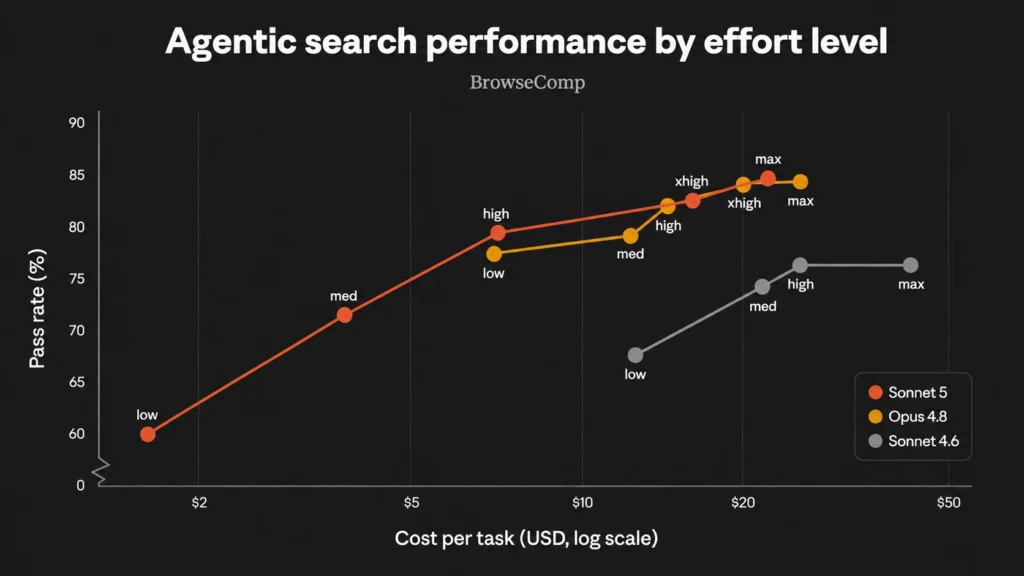
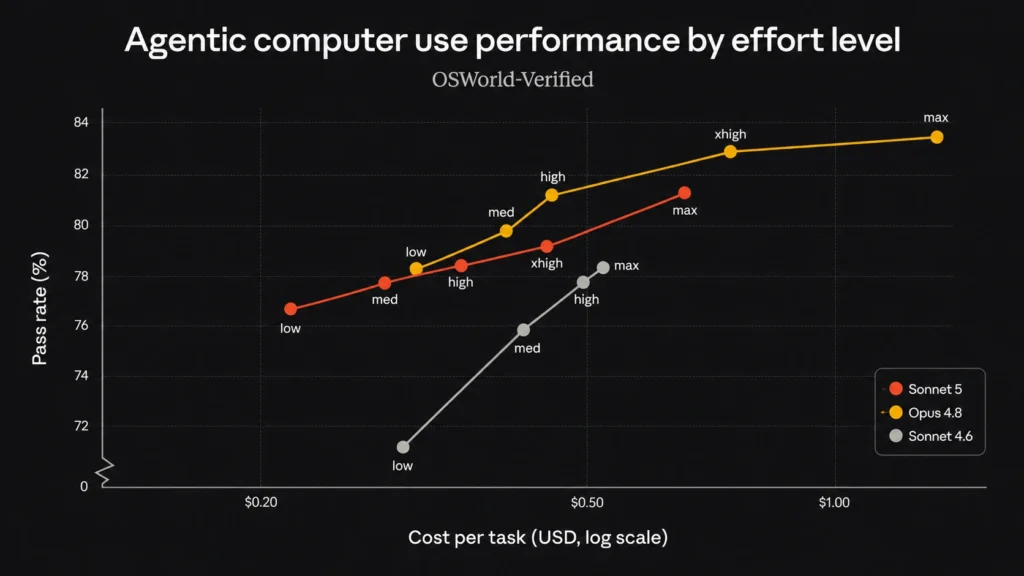
Claude Sonnet 5 can research on its own by searching the web and using a computer the way a person would. It can open pages, pull figures, and work across browsers and terminals to gather what you need. That makes it useful for competitor scans, market sizing and pulling a briefing together from many sources at once.
Two features drive this. Agentic search lets the model look things up across the web and judge what is relevant, tested on a benchmark Anthropic calls BrowseComp. Computer use lets it operate software directly, as measured on OSWorld-Verified. Together, they mean you can ask a broad question and get a worked answer rather than a list of links to sift through yourself.
For a marketing team, that is a research assistant who does the legwork. Knowing how to use Claude Sonnet 5 for research pays off when you need a competitor teardown, a scan of pricing across a market, or a summary of what customers say on review sites. You still set the questions and sense-check the output, but the gathering and the first-pass synthesis happen far faster than doing it by hand.
How to use Claude Sonnet 5 for data analysis and reporting
Numbers are the other quick win. You can point the model at live data and ask it to explore, spot trends and produce insight on the fly, rather than waiting on a manual report. For a marketing team, that means faster answers on what a campaign did, which channels pulled their weight, and where spend is leaking.
The self-checking habit matters here, too. Because the model verifies its own steps, it is less likely to hand you a confident but wrong figure, though you should still confirm anything that drives a budget decision. Pairing this with your existing AI tools for marketing gives you a quicker path from raw data to a clear recommendation.
A sensible pattern is to let the model draft the analysis and the summary, then have a person confirm the method and the headline numbers. That keeps speed high while protecting you from the odd error that any model can make. The aim is a faster reporting cycle, not a hands-off one.
Getting started, and where the limits are
Getting started is straightforward. Claude Sonnet 5 is available across all Claude plans and is the default model on the Free and Pro tiers, so many teams already have access. You can use it in the Claude app, in Claude Code, and through the Claude API with the model name claude-sonnet-5 if you want to build it into your own tools.
Before you scale up, keep three things in mind. First, cost is not only about the headline price: the new tokeniser can turn the same input into 1.0 to 1.35 times more tokens, so test with real prompts before you forecast a bill. Second, keep a person in the loop for anything that touches your brand or your budget. Third, pick the right tool for the job, since a marketer’s guide to Claude and ChatGPT can help you decide which model suits which task.
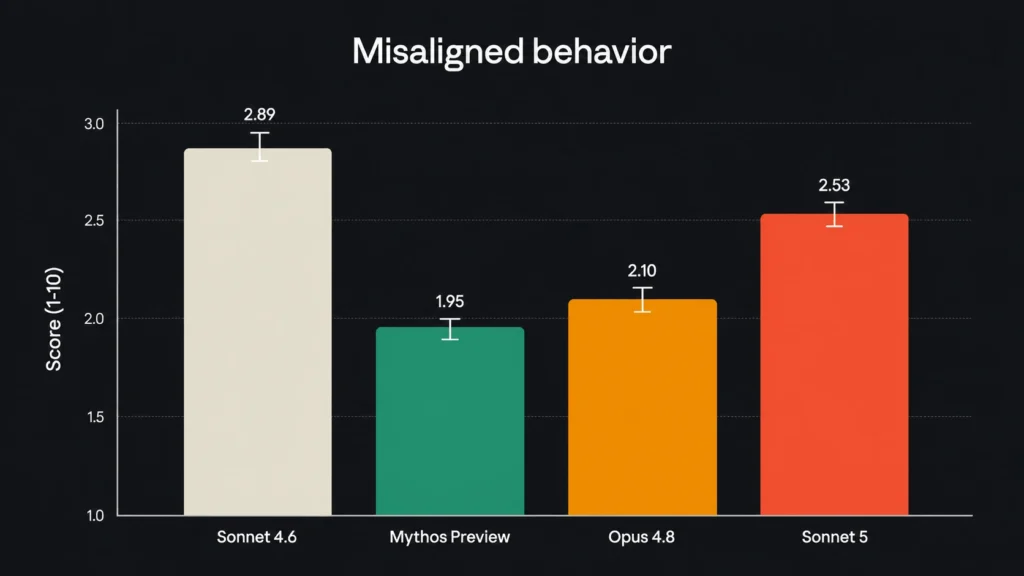
On trust, Anthropic publishes safety evaluations alongside the model, which is worth a read if AI governance sits on your roadmap. For most teams, the practical guardrail is simple: start with low-risk tasks, review the output, and widen the scope as your confidence grows.
Conclusion
The headline is easy to summarise. Claude Sonnet 5 for marketing brings close to Opus-level quality within reach of everyday budgets, which changes what a small team can automate. Lead with the cost story, then put the model to work on content, campaigns, research and reporting, and keep a human hand on quality throughout.
If you want a hand putting this into practice, you can talk to our team about an AI and content workflow that fits your goals and budget. The tools are ready; the advantage goes to the teams that build a sensible process around them.
FAQs
How much does Claude Sonnet 5 cost?
Claude Sonnet 5 launched with introductory pricing of $2 per million input tokens and $10 per million output tokens, running through 31 August 2026. After that, it moves to $3 per million input and $15 per million output. For comparison, Opus 4.8 costs $5 and $25, so Sonnet 5 sits well below the flagship model.
Is Claude Sonnet 5 as good as Opus 4.8 for marketing?
For most marketing tasks, it is close enough to matter. Anthropic says Sonnet 5’s performance is near Opus 4.8 and can match it on some tasks at higher effort. For drafting, research and reporting, the small quality gap is usually worth the large saving, with Opus kept for the hardest reasoning jobs.
What marketing tasks can Claude Sonnet 5 automate?
It suits multi-step, repetitive work: drafting and repurposing content, updating CRM records, syncing segments, queuing outreach, running competitor research, and pulling campaign data into a report. Its agentic features let it plan and finish these chains of steps, while you set the brief and review the result.
Which plan do I need to use Claude Sonnet 5?
Claude Sonnet 5 is available on every Claude plan and is the default model on the Free and Pro tiers, so you can try it at no cost. Teams that want to build it into their own systems can call it through the Claude API using the model name claude-sonnet-5.

More insights.

Claude vs ChatGPT for marketing, and where Gemini fits
We ran the same three marketing briefs through Claude, ChatGPT and Gemini, then compared what each costs a UK team and what it does with your data.

How to get recommended by ChatGPT and AI search
More customers now ask ChatGPT who to call. Here is what OpenAI says decides which businesses it names, and the six steps that make yours one of them.

WordPress 7.0: What the New Release Means for Your Website
WordPress 7.0 is out on 20 May 2026 with native AI, a refreshed admin and new PHP requirements. Here's what's new, plus a safe upgrade guide.